
How to Remove a Bank Charge (Boja) from a Maharashtra 7/12 Extract
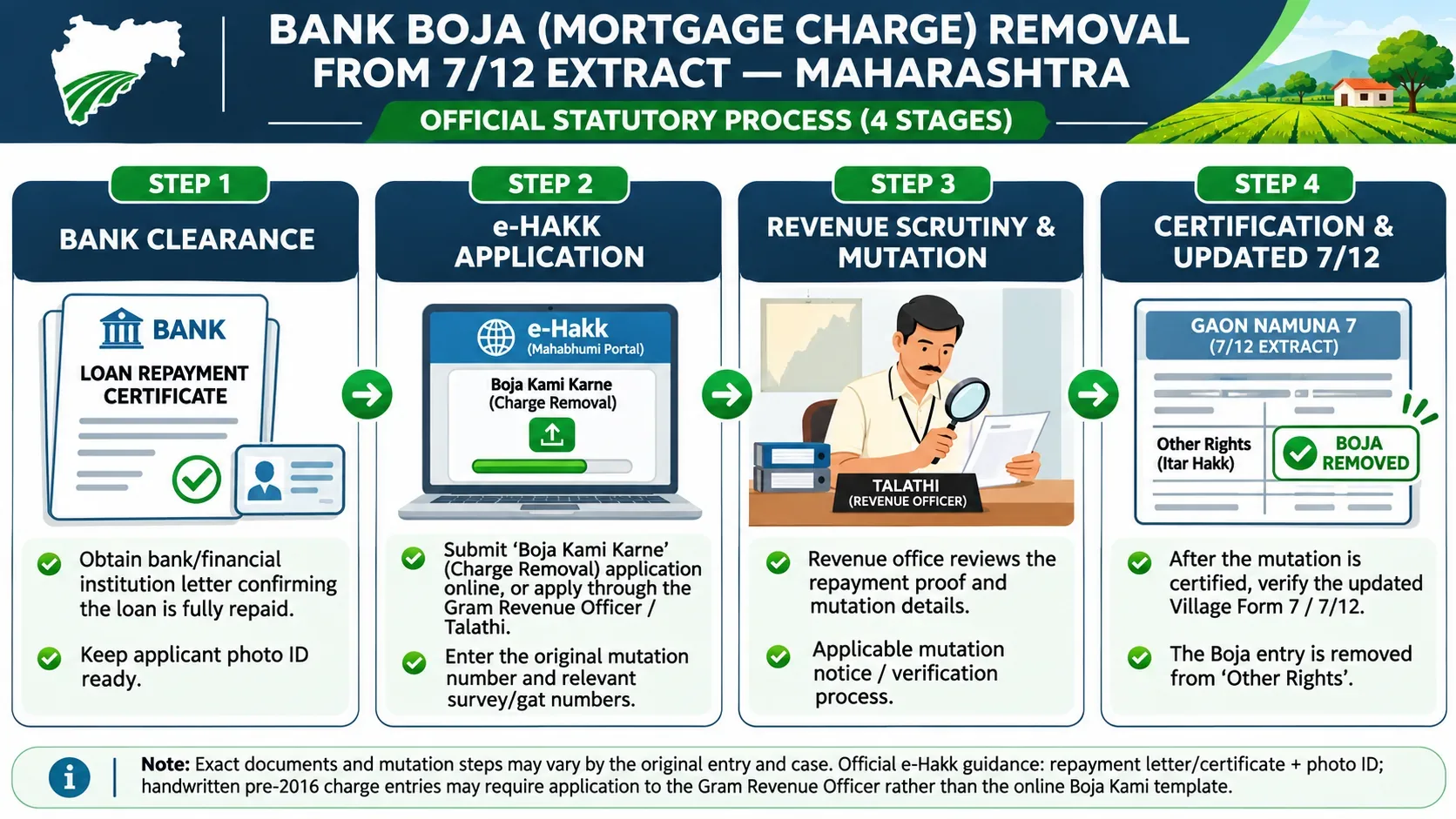
To remove a bank mortgage charge (Boja) from a Maharashtra 7/12 extract, obtain a formal No-Dues Certificate (कर्जमुक्ती दाखला) and Form 17 from the lender. Submit an online mutation request via the Mahabhumi e-Hakk portal under the Boja Kami Karne module. Following Talathi scrutiny and a 15-day Section 150 notice on Aapli Chawadi, the Circle Officer certifies the mutation, striking off the encumbrance.
Administrative Dimension Fact Sheet
| Administrative Dimension | Statutory Specification & Governance Standard |
|---|---|
| Administrative Procedure | Bank Charge Release Mutation (बँक बोजा कमी करणे / बोजा मुक्ती फेरफार) |
| Governing Legal Statutes | Sections 149, 150 of Maharashtra Land Revenue Code, 1966 & Transfer of Property Act, 1882 |
| Official Application Portal | Mahabhumi e-Hakk Portal |
| Mandatory Source Documents | Bank No-Dues Certificate (कर्ज फेडल्याचा दाखला), Form 17 (Release Deed), Bank Officer Authorization Letter |
| Public Notice Mechanism | Mandatory 15-day public notice on Aapli Chawadi (आपली चावडी) under Section 150 MLRC |
| Approving Authority | Revenue Circle Officer (मंडळ अधिकारी) upon Talathi field verification |
| Standard Processing Window | 15 to 21 working days from online submission to 7/12 extract update |
| Physical Record Visual Format | The original bank note is struck through with a horizontal line and tagged with a bracketed Form 6 Mutation Number |
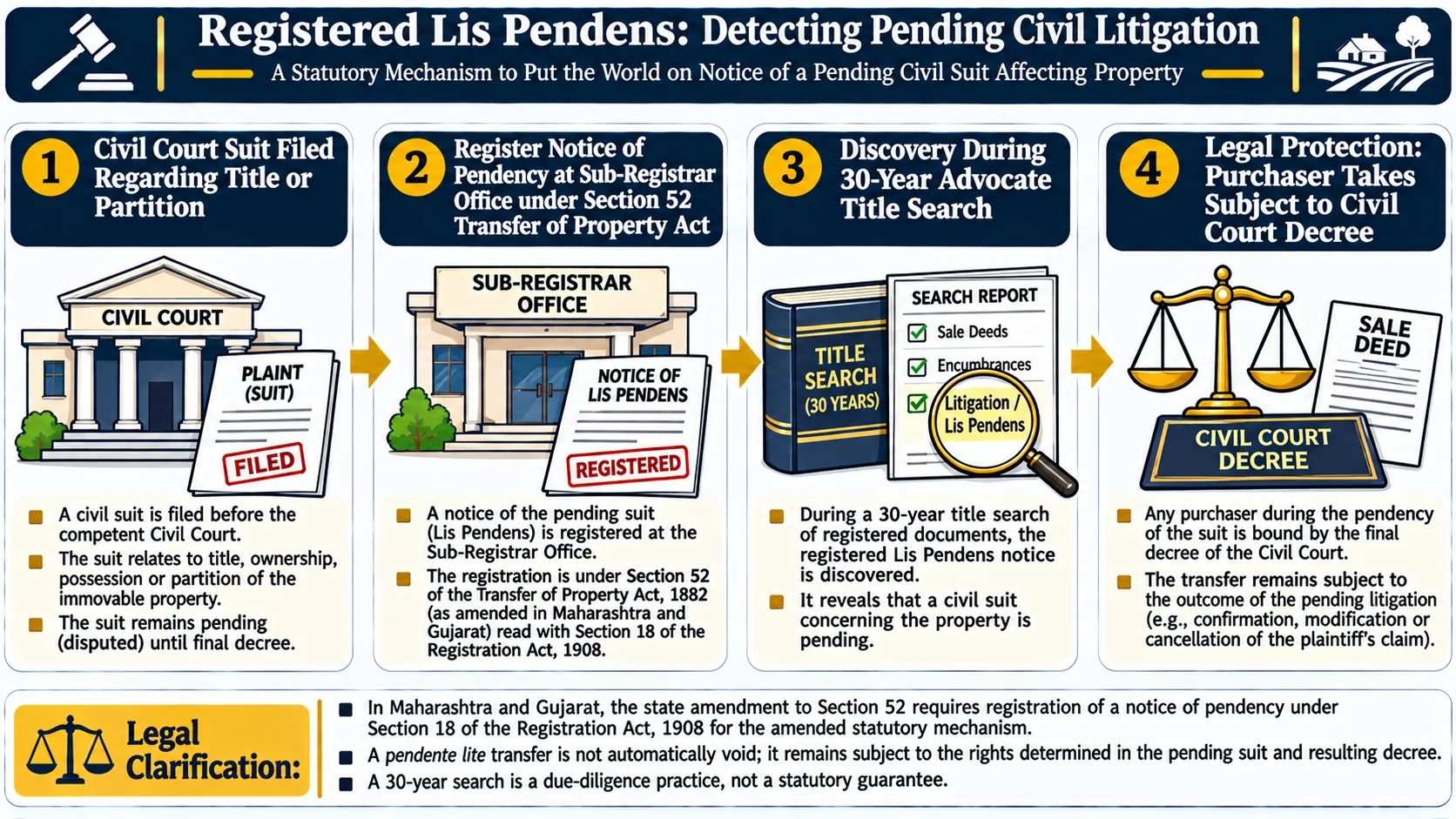
1. Understanding Bank Boja & Legal Implications on Gaon Namuna 7
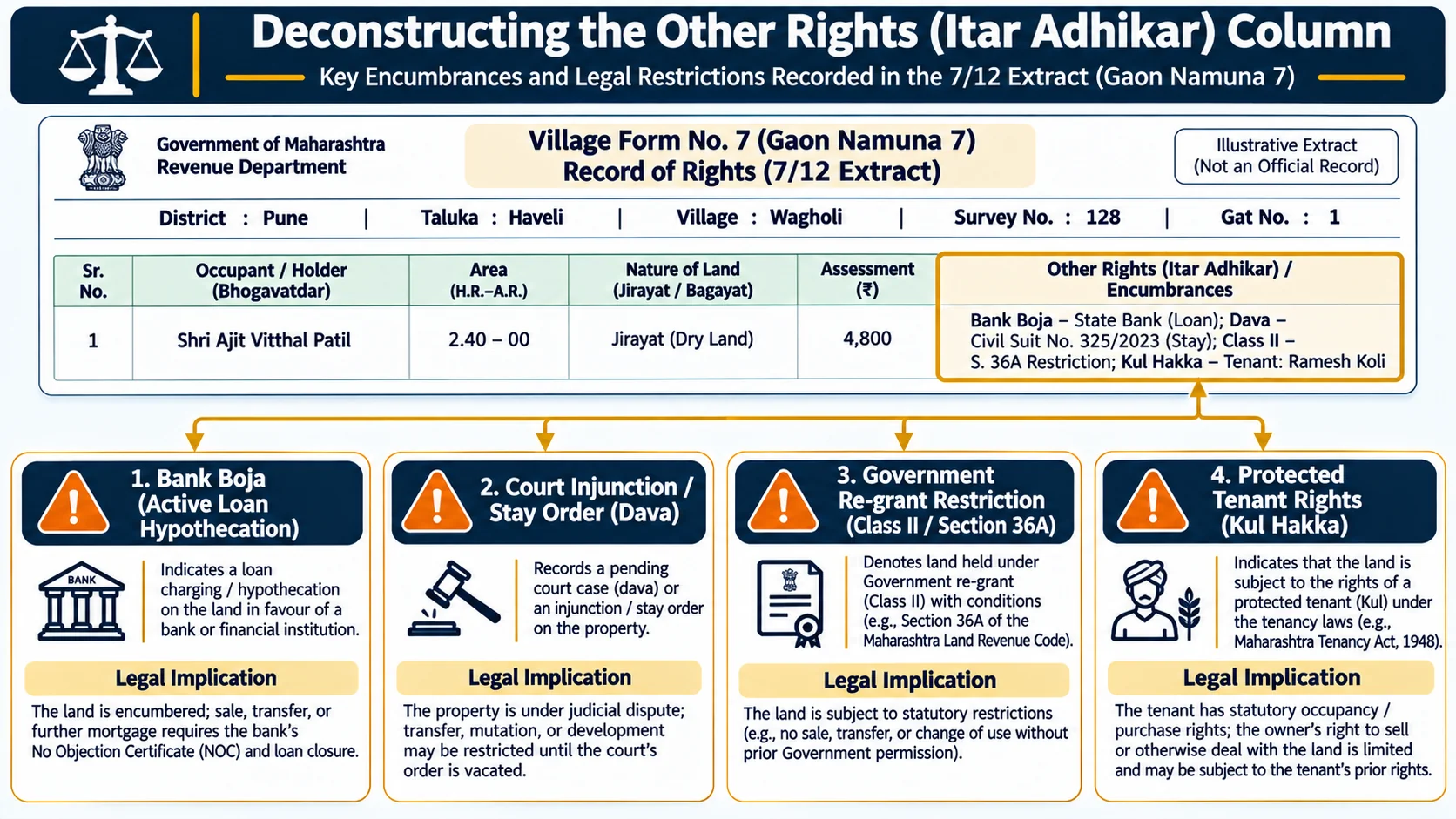
Under the Maharashtra Land Revenue Code, 1966, a Boja (बोजा) denotes a registered statutory encumbrance, charge, or financial lien entered upon an agricultural holding. When an agricultural landholder secures a crop loan, Kisan Credit Card (KCC) facility, machinery hypothecation, or term advance from a commercial, cooperative, or regional rural bank, the lending institution notifies the revenue administration pursuant to the Maharashtra Provision of Facilities for Agricultural Credit by Banks Act, 1974.
The Talathi records this financial encumbrance in the Itar Hakka (इतर हक्क - Other Rights) column on Village Form VII. The statutory entry specifies the lending institution's corporate name, the sanctioned loan amount, and the governing Village Form 6 Ferfar mutation number.
- Prohibition on Conveyance: The Sub-Registrar of Assurances will refuse to register a Sale Deed (खरेदीखत), Gift Deed (बक्षीसपत्र), or Partition Deed (वाटपपत्र) without a No-Objection Certificate (NOC) from the charge-holder bank.
- Second Loan Restriction: Secondary lenders will not sanction agricultural or housing mortgages over encumbered land without a Pari-Passu charge agreement.
- Attachment Risk: If default occurs, the lender may initiate recovery proceedings through the Co-operative Court or under Section 101 of the Maharashtra Co-operative Societies Act 1960.
2. Step-by-Step 4-Stage Procedure for Removing Bank Boja
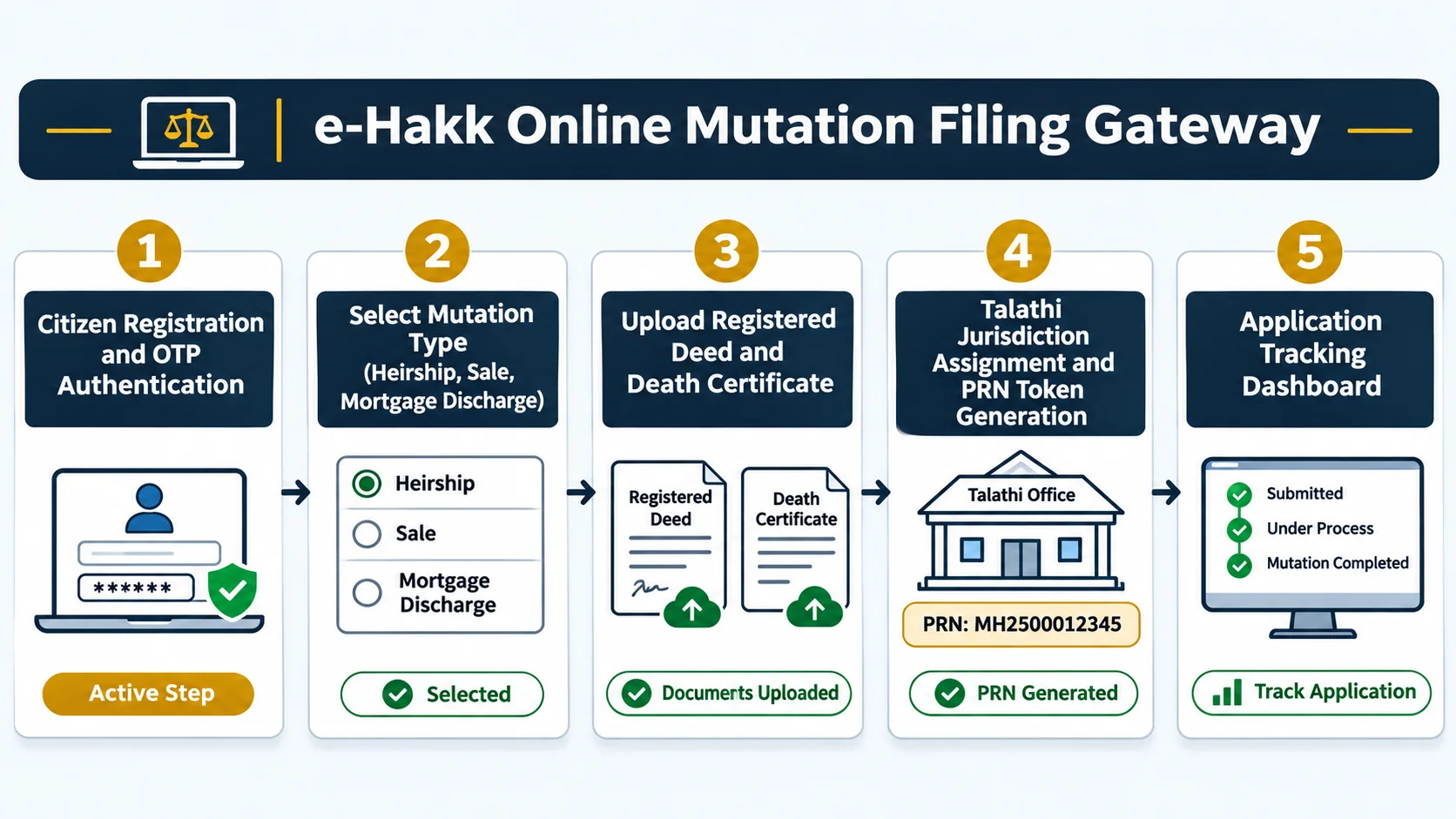
Follow this statutory administrative procedure to clear an encumbrance from your land record under Section 150 of the MLRC:
-
Stage 1: Secure Bank Release Instruments:
Upon full loan settlement, collect the following physical instruments from the lending branch:
- No-Dues Certificate (कर्ज फेडल्याचा दाखला): Issued on the bank's official letterhead with seal and authorized signatory signature, certifying zero outstanding balance against the loan account.
- Form 17 / Release Letter: Addressed to the Tahsildar / Talathi requesting the formal deletion of the bank's charge from the specified Survey/Gat number.
- Attested Copy of Original Mutation: If available, provide the earlier Ferfar extract through which the Boja was originally recorded.
-
Stage 2: File Online Mutation via Mahabhumi e-Hakk:
Citizens may submit the mutation application directly online without visiting the Talathi office:
- Navigate to the official portal: e-Hakk Online Mutation Portal.
- Register or sign in with your verified mobile number and password.
- Select the mutation module: बँक बोजा कमी करणे (Bank Charge Removal).
- Choose your District, Taluka, and Revenue Village.
- Enter your Survey / Gat Number and select the Khatedar name.
- Input the bank name, branch, original loan amount, and settlement date.
- Upload scanned PDF copies of the No-Dues Certificate and Bank Release Letter.
- Submit the application and download the generated e-Hakk Application Reference Number.
-
Stage 3: Talathi Verification & Section 150 Public Notice:
Upon electronic receipt of the e-Hakk application:
- The Talathi scrutinizes the uploaded bank instruments against the live revenue ledger.
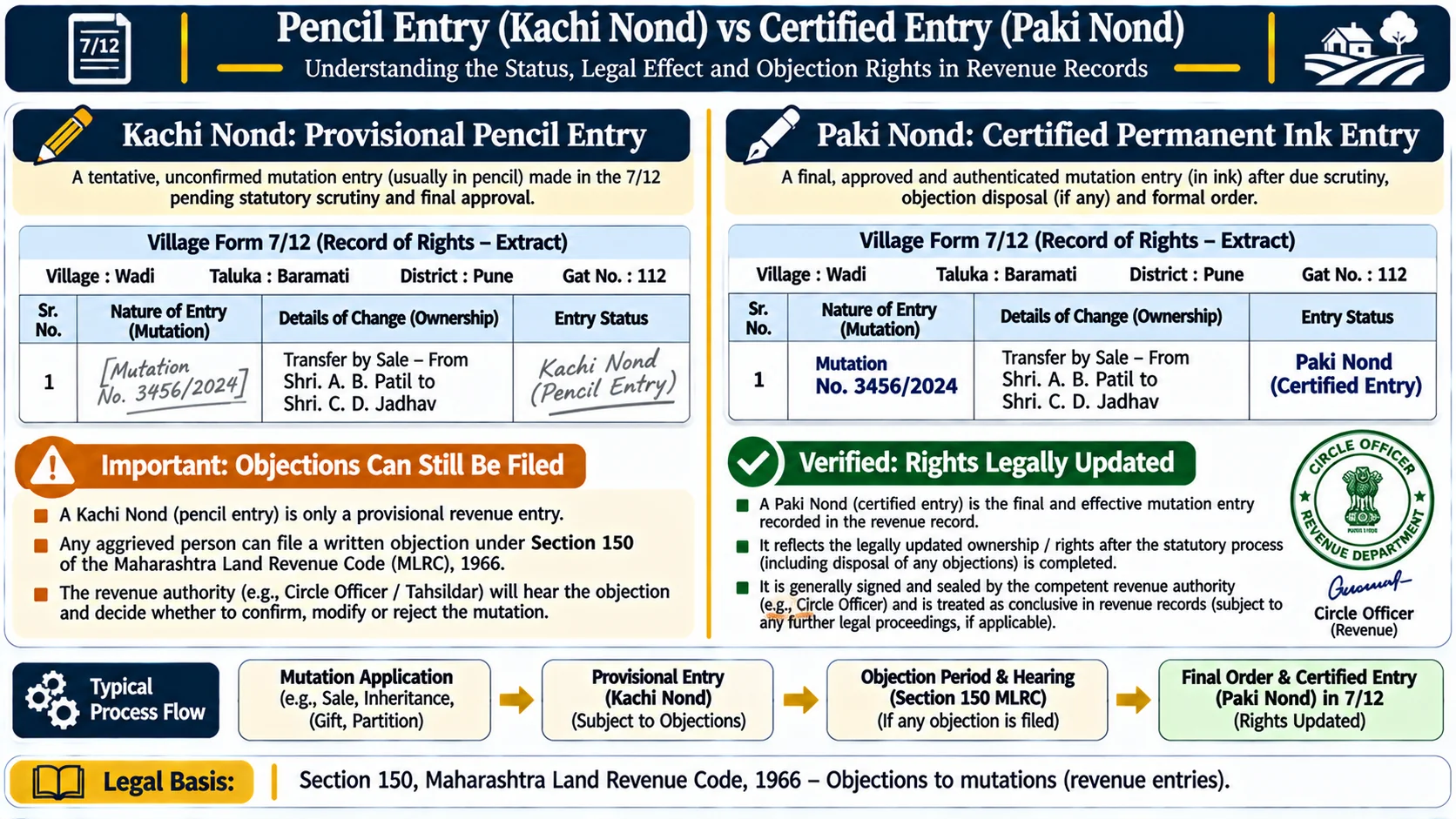
- A provisional entry (कच्ची नोंद) is recorded in Village Form 6 Ferfar.
- A statutory 15-day public notice is generated under Section 150 of the MLRC 1966 and displayed on the digital notice board Aapli Chawadi.
- During this 15-day period, interested co-holders or the public may file written objections if financial liabilities remain unsettled.
-
Stage 4: Circle Officer Certification & 7/12 Extract Update:
Upon completion of the 15-day notice window without objection:
- The Revenue Circle Officer (मंडळ अधिकारी) reviews the record and certifies the mutation order (पक्की नोंद).
- The electronic land records database updates automatically.
- The physical visual representation on Gaon Namuna 7 displays a horizontal strike-through line across the bank charge entry in the Itar Hakka column, cross-referenced with the new bracketed Ferfar number.
3. Resolving Complex Complications & Historical Loan Entries
Landholders encounter specific administrative challenges when resolving charges from merged or liquidated financial institutions:
1. Lending Bank Branch Has Closed, Merged, or Amalgamated
Following public sector bank consolidations, legacy branch codes and seals become legally obsolete. Successor institution resolution protocol:
- Obtain the No-Dues Certificate from the designated successor anchor branch.
- Ensure the certificate explicitly notes: "Formerly known as [Original Bank Name], Branch [Branch Name], Loan A/c [Old Number]".
- Attach a copy of the Reserve Bank of India (RBI) merger notification if requested by the revenue desk.
2. Cooperative Credit Society Has Gone into Liquidation
For liquidated cooperative banks or defunct Primary Agricultural Credit Societies (PACS):
- Do not contact defunct office bearers.
- Submit a formal petition to the District Deputy Registrar (DDR) of Cooperative Societies.
- The government-appointed Official Liquidator examines society ledgers, confirms loan clearance, and issues a formal statutory clearance order directed to the Tahsildar.
3. Historical Boja Entries Exceeding 30 Years
Where agricultural loans disbursed in prior decades remain recorded despite satisfaction, and banking records have been archived:
- File a miscellaneous revenue application before the Sub-Divisional Officer (SDO) or Tahsildar under Section 247 of MLRC.
- Submit an indemnity bond along with available passbooks, repayment challans, or an affidavit confirming full settlement without litigation for over 30 years under the Limitation Act 1963.
Frequently Asked Questions Regarding Bank Boja Removal
Does repaying a bank loan automatically remove the Boja from my 7/12 extract?
No. Repaying a bank loan does not automatically clear the land record. You must obtain a formal No-Dues Certificate (कर्जमुक्ती दाखला) from the lending institution and submit a formal mutation application via the Mahabhumi e-Hakk portal or directly to the village Talathi to execute a Form 6 mutation.
What is the statutory timeline for removing a bank Boja in Maharashtra?
The standard statutory timeline is 15 to 21 working days. Under Section 150 of the MLRC 1966, a mandatory 15-day public notice period on Aapli Chawadi is required before the Circle Officer can certify the mutation order.
How is a removed bank charge displayed on the updated 7/12 extract?
In Maharashtra revenue practice, the original bank entry is not deleted entirely. A strike-through line is drawn across the bank charge in the Itar Hakka (Other Rights) column, accompanied by a bracketed Ferfar Mutation Number referencing the Circle Officer's cancellation order.
What should I do if the lending bank branch has merged or closed down?
If a bank has merged (e.g., public sector bank amalgamations), the successor bank's designated regional asset recovery branch issues the No-Dues Certificate quoting the historical account number. If an old cooperative society has liquidated, an application must be submitted to the District Deputy Registrar (DDR) of Cooperative Societies.
Official Statutory References & Government Portals
- Mahabhumi e-Hakk Official Mutation Portal: Public online submission portal for Bank Boja removal and legal mutations.
- Aapli Chawadi Digital Notice Board: Public notice tracking system under Section 150 of MLRC 1966.
- DigitalSatbara Certified Extract Portal: Procure authenticated 7/12 and Ferfar records confirming debt release.
- Maharashtra Land Records Department: Governing circulars on computerized mutation processing.
Related Guides: Maharashtra 7/12 Land Records Hub | Download Digitally Signed 7/12 | Buyer 7-Point Due Diligence Checklist.